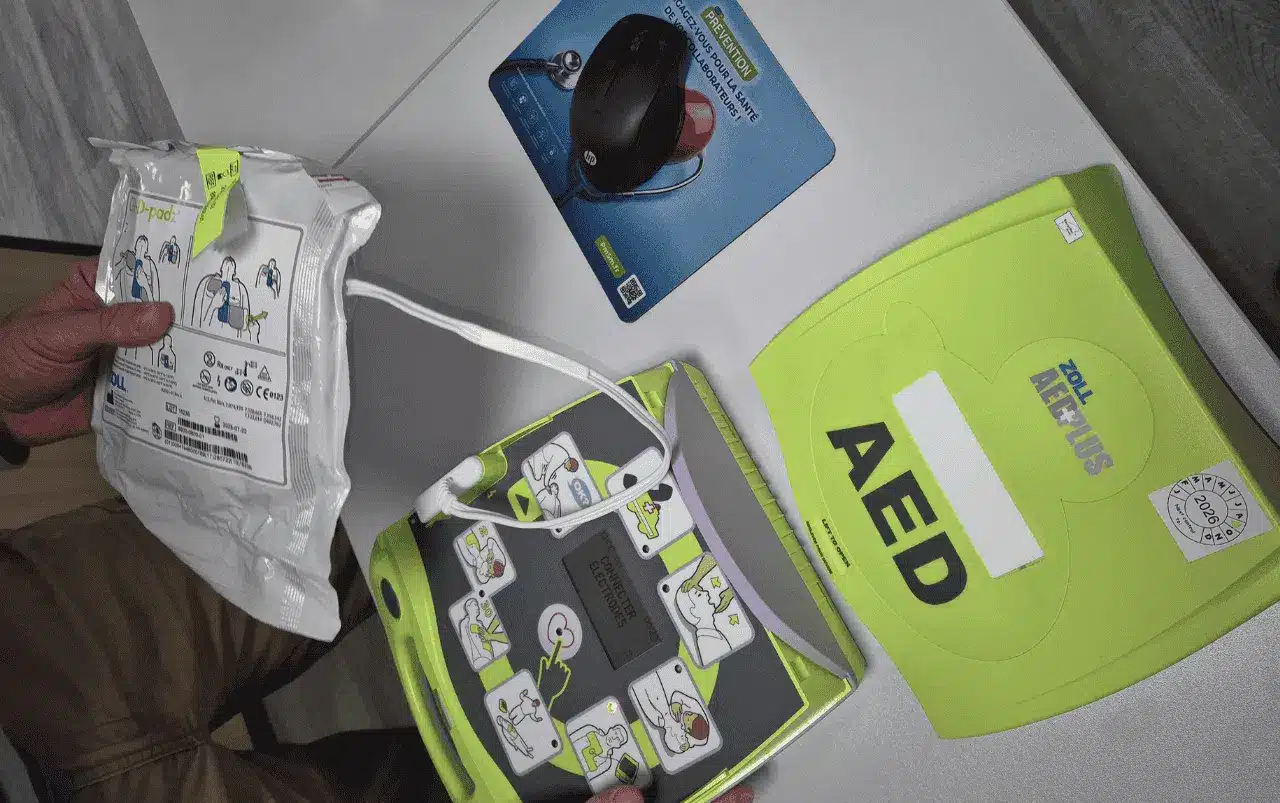
In the event of cardiac arrest, every minute counts. In a professional environment, access to an automated external defibrillator (AED) can save a life; installing this type of equipment is even mandatory for certain facilities and vessels. Which organizations are concerned? What obligations must be met when an AED is installed? As a biomedical engineering specialist, BiomaiX clarifies French regulatory requirements—which may differ outside mainland France—and provides tailored compliance solutions.
Key Takeaways
- BiomaiX supports organizations in managing, maintaining, and ensuring compliance for automated external defibrillators (AEDs) in accordance with French regulations.
- Defibrillator maintenance is a mandatory legal obligation under French law. It is also essential to ensure equipment readiness and operational availability during an emergency.
- As a biomedical engineering specialist, BiomaiX offers comprehensive maintenance solutions, AED rental options, and staff emergency training.
Is an AED Mandatory in a Workplace or On Board?
Having a defibrillator on site or at sea is strongly recommended to respond effectively to medical emergencies. Under French regulations, it is a strict legal requirement for many public-facing facilities and commercial vessels. Please note that applicable rules depend on local legislation and may differ outside mainland France (overseas territories or international maritime zones).
Which Organizations Must Install an Automated External Defibrillator (AED)?
Under French Decree No. 2018-1186, most public-facing establishments in mainland France must be equipped with one or more AEDs. This includes:
- Care facilities for the elderly or persons with disabilities;
- Railway stations and transport hubs;
- Public and private healthcare institutions and medical centers;
- Indoor sports facilities and multi-purpose venues;
- Mountain shelters and high-altitude hotel-restaurants.
Does a Non-Public Commercial Site Require a Defibrillator?
For private corporate sites or industrial facilities that do not host the general public, installing an AED is not a strict statutory requirement under French law. However, employers and vessel operators are legally required to provide first aid equipment adapted to specific workplace hazards (Article R4224-14 of the French Labor Code).
Health authorities also emphasize that any organization is free to install an AED to help save lives!
What Requirements Apply to Organizations Equipped With an AED?
When an AED is installed under French jurisdiction, it must remain accessible and fully operational at all times. This involves specific legal obligations regarding maintenance, signage, and location registration.
Is Defibrillator Maintenance Mandatory?
Yes. Under French law, facility operators and employers must ensure the routine upkeep and maintenance of every AED. This includes:
- Verifying overall equipment integrity and status indicators;
- Monitoring consumables, such as electrode pads and batteries;
- Tracking safety alerts and manufacturer updates;
- Applying software updates and necessary servicing as recommended by the manufacturer.
The primary objective is to prevent AED failure during a critical event. Routine maintenance also provides full traceability of all inspections and service operations.
Should an AED Be Registered in the National Géo'DAE Database?
Yes. French regulations mandate that all AEDs installed in France must be declared in the national Géo'DAE database. This geolocates the devices so emergency services and medical responders can find them quickly when needed.
What Signage Should Be Provided for an AED?
Official signage complying with French regulatory standards (Order of October 29, 2019) must be installed to identify the presence and exact location of an AED rapidly. Beyond legal compliance, visible signage ensures immediate access during an incident, where every second counts!
BiomaiX Supports Organizations in Managing Their Defibrillators
Why Entrust AED Management and Maintenance to a Professional?
Partnering with a biomedical engineering specialist like BiomaiX ensures tailored operational support. It saves valuable administrative time and guarantees that all maintenance protocols are executed according to regulatory requirements: En déléguant la gestion des DAE, l’entreprise s’assure que toutes les démarches de maintenance sont effectuées dans les règles :
- Regular equipment inspections;
- Early detection of potential hardware malfunctions;
- Continuous regulatory monitoring (French standards and international equivalents);
- Rapid repair or equipment replacement when needed.
Overview of BiomaiX Solutions
Preventive and Corrective AED Maintenance
BiomaiX manages defibrillator fleets through dedicated preventive and corrective maintenance services. These services cover:
- Complete equipment functionality checks;
- Verification of critical sub-systems;
- Proactive replacement of expiring consumables.
Defibrillator Rental With Managed Services
For organizations seeking up-to-date equipment while managing capital expenditure, BiomaiX provides flexible AED rental packages with full service support included.
Employee Awareness and Emergency Response Training
While modern AEDs are designed for ease of use by any bystander, basic emergency response training significantly improves reaction times during a critical incident. Trained personnel are familiar with the essential steps: calling emergency services, performing CPR, and operating an AED effectively.
Frequently Asked Questions (FAQ)
Do defibrillators require regular maintenance?
Yes, regular maintenance is a mandatory legal requirement under French law. An automated external defibrillator (AED) must be inspected periodically to ensure complete operational readiness during an emergency. Service operations verify the hardware status, power levels, pad expiration dates, and overall system functionality.
Who can use an automated external defibrillator?
Anyone can use an AED. These devices are designed with automated voice prompts and visual instructions for non-medical personnel. However, basic first aid training provides additional confidence and efficiency when responding to an onboard or on-site emergency. These training sessions can be held at the company